

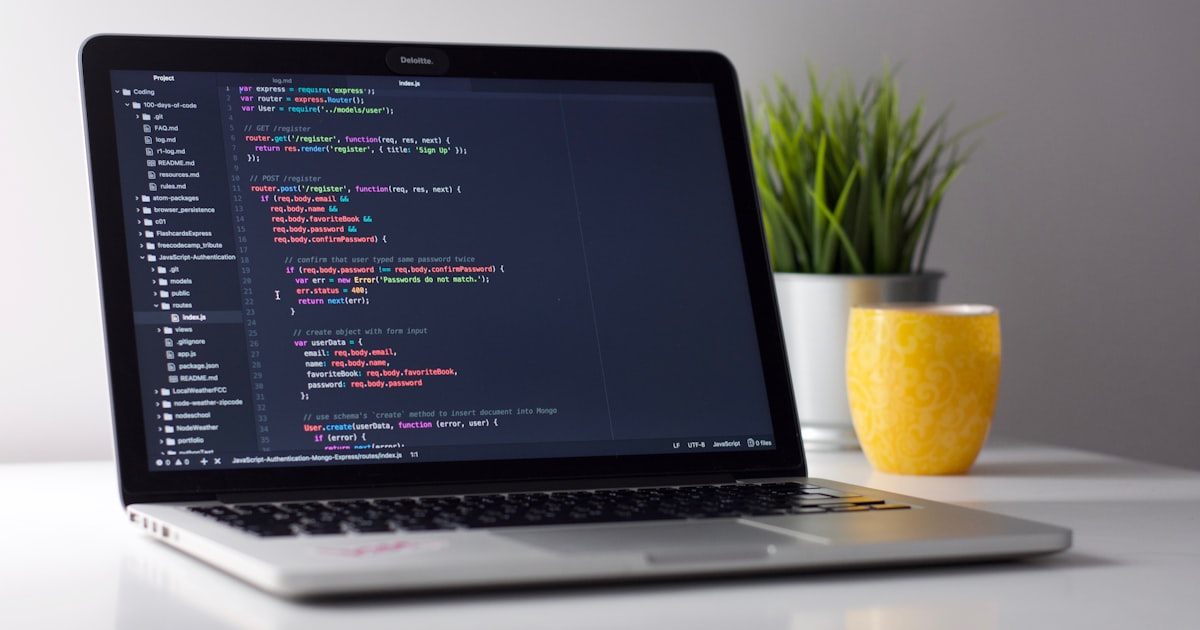
Code reviews are essential but expensive. A senior engineer reviewing a 200-line pull request takes 30–60 minutes — and that’s assuming they’re fresh, not fatigued from a full day of context switching. AI reviews the same PR in seconds, catching logic errors, security vulnerabilities, and performance issues that a tired human reviewer might miss. The result isn’t replacing human review — it’s making it dramatically more effective.
The Business Case for AI Code Review
Beyond the engineering benefits, the business case is straightforward:
- Security vulnerabilities caught pre-production cost an average of $80 to fix. The same vulnerability found post-production costs $7,600 (IBM Cost of a Data Breach Report 2024)
- Review bottlenecks are one of the top reasons PRs sit unmerged for days. AI pre-review clears the queue so human reviewers focus on architecture, not syntax
- Onboarding new developers is safer when AI flags patterns that violate your codebase’s conventions before the first PR is merged
Teams using AI code review consistently report 40–60% faster PR cycle times and a measurable reduction in security-related bugs reaching production.
What AI Code Review Does Well
- Spotting SQL injection, XSS, and CSRF vulnerabilities
- Identifying N+1 queries and database performance issues
- Flagging hardcoded credentials, API keys, and secrets
- Finding logic errors in conditionals and edge cases
- Suggesting more readable, idiomatic code
- Checking error handling completeness
- Identifying missing test coverage for critical paths
It’s not a replacement for human review — it’s a pre-flight check that filters out the noise so your reviewers focus on what matters: architecture decisions, business logic correctness, and system-level concerns that require context AI doesn’t have.
The Core Code Review Prompt
For any PR or code block, paste the code and use this prompt with Claude or ChatGPT:
Review this [language] code and provide: (1) A severity-ranked list of bugs and issues — Critical, High, Medium, Low. (2) Security vulnerabilities with OWASP references where applicable. (3) Performance issues. (4) Code quality and readability improvements. For each issue: explain the problem, the risk, and provide a specific fix. Do not rewrite the entire function unless you flag it as Critical. Preserve the existing code structure where possible.
The severity ranking is important — without it, AI tends to treat a missing semicolon with the same weight as an authentication bypass.
Security-Focused Review
For security-critical code — authentication flows, payment processing, file uploads, admin access controls — use a dedicated security audit prompt:
Perform a security audit of this code. Check specifically for: SQL and command injection, authentication and authorisation bypass, insecure direct object references, sensitive data exposure in logs or responses, broken access control, insecure deserialization, and use of components with known vulnerabilities. Reference CVEs or the OWASP Top 10 where relevant. Provide severity and remediation for each finding.
Integrating AI Review into Your CI/CD Pipeline
Manual prompting is useful for ad hoc review, but the real efficiency gain comes from automating it on every PR. The main tools for this in 2026:
- CodeRabbit — GitHub and GitLab integration. Reviews PRs automatically on every push and posts inline comments ranked by severity. Free for open-source projects
- Cursor — IDE-level AI review with explain-as-you-type features. Best for individual developers who want real-time feedback
- Sourcery — Python-focused. Excellent for refactoring suggestions and complexity reduction
- DeepSource — Static analysis with AI-assisted fix suggestions. Supports 12+ languages
Setting up CodeRabbit with a GitHub Action takes about 15 minutes and provides automated review on every PR from that point forward. It posts comments directly on the diff, similar to a human reviewer.
Reviewing Other People’s Code Faster
When you’re the human reviewer, AI can still speed up your work significantly. Use it to get oriented quickly on unfamiliar code:
I’m reviewing this PR. The stated goal is [description from the PR]. Does this code achieve the stated goal? Are there any edge cases not handled? Is the logic in [specific function] correct? What tests are missing for the critical paths? Are there any patterns here that would make future maintenance difficult?
This is particularly useful when reviewing code in a language or framework you’re less familiar with.
Creating a Team Code Review Standard
One of the most valuable applications of AI code review is creating consistency across a team. Different reviewers have different standards, and important issues get missed when review quality depends on who happens to be available.
Build a team checklist — your specific security requirements, architectural patterns to follow or avoid, naming conventions, test coverage requirements — and include it in every AI review prompt:
Review this PR against our team standards: [paste checklist]. Flag any deviations. Then perform a general review for bugs, security issues, and performance problems not covered by the checklist.
This ensures every PR gets checked against the same standard, regardless of who’s reviewing.
Limitations to Know
AI code review has a context window limit — send individual files or logical units of code rather than an entire codebase. It also lacks business context: it can’t know that your company has a specific policy against a particular pattern, or that a function behaves differently due to a third-party integration. Always pair AI review with human review for code that reaches production.
The goal is a faster, more thorough review process — not a fully automated one. Use AI to handle the mechanical checks so your engineers can focus on the thinking that actually requires their expertise.

